
TECC for Law Enforcement and Fire Services
Course Overview
This 8-hour Tactical Emergency Casualty Care (TECC) course equips law enforcement officers and fire service personnel with critical life-saving medical skills required during violent incidents, high-risk responses, and austere or dynamic environments.
Designed for non-medical first responders, this course focuses on the leading preventable causes of death encountered by law enforcement and fire personnel operating prior to EMS access, including uncontrolled hemorrhage and severe traumatic injury. The training reflects the operational realities faced by responders working in hot, warm, and transitional zones of care.
Recognized TECC Educational Partner
Tactical Emergency Casualty Care (TECC) is a nationally recognized, evidence-based framework for managing life-threatening trauma in high-risk and operational environments, particularly for public-safety personnel operating before definitive medical care is available. TECC guidance is developed and maintained by the National Association of Emergency Medical Technicians (NAEMT) through its Committee for Tactical Emergency Casualty Care (C-TECC), which continuously reviews medical evidence and operational data to inform best practice.
TNT Justice Consultants is a recognized training partner delivering TECC-aligned education tailored to Canadian law enforcement and fire service environments. Training emphasizes lawful, reasonable, and proportionate life-saving interventions, operational realism, and duty-of-care considerations. TNT does not provide medical treatment or medical certification.
All successful participants receive a Certificate of Completion issued by TNT Justice Consultants with a TECC stamp.

Why TECC for Law Enforcement & Fire Services?
- Police and fire personnel are often first on scene at shootings, stabbings, fires, explosions, MVCs, and mass-casualty incidents
- Seconds matter when hemorrhage and airway compromise are present
- Traditional first aid does not account for threat environments, scene instability, or delayed EMS access
- TECC bridges the gap between operational response and emergency medicine
This course trains participants to:
- Provide life-saving care while maintaining situational awareness
- Treat themselves, colleagues, or civilians under stress
- Integrate medical response into tactical or incident command considerations
- Sustain life until EMS transfer or evacuation is possible
Participants will learn:
Participants gain both theoretical knowledge and hands-on skills, including:
- TECC principles and Zones of Care
- Direct Threat Care
- Indirect Threat Care
- Evacuation Care
- The MARCH Algorithm
- Massive Hemorrhage
- Airway
- Respirations
- Circulation
- Hypothermia / Head Injury
- Anatomy and physiology of bleeding
- Why people die from blood loss and how to stop it
- Tourniquet application (self-aid and buddy-aid)
- Wound packing and junctional hemorrhage control
- Use of hemostatic gauze and pressure techniques
- Management of traumatic amputations
- Recognition and management of penetrating chest injuries
- Chest seal application
- Scenario-based medical response
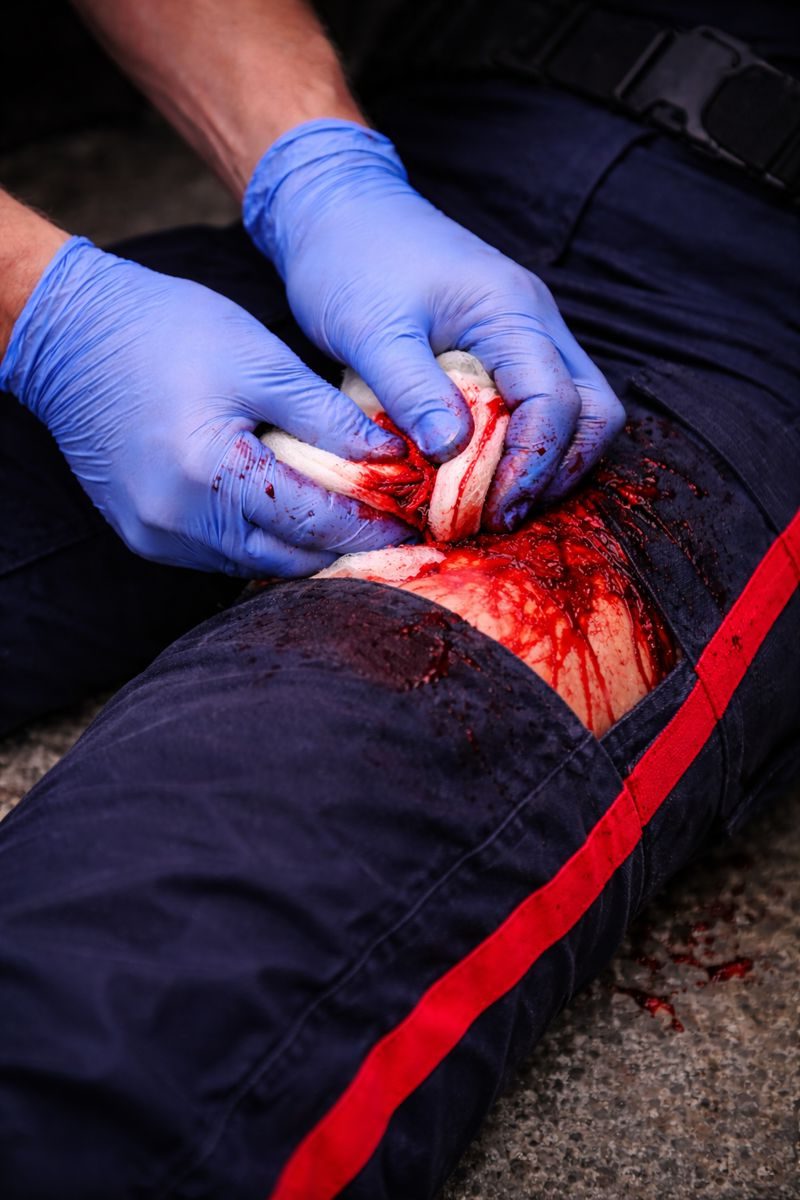
Hands-On, Reality-Based Training
This course prioritizes practical skill development over theory alone.
✔ Tourniquet application drills
✔ Wound packing using dedicated trainers
✔ Team-based casualty care
✔ Stress-inoculated scenarios
✔ Instructor-led coaching and correction
Participants leave confident in their ability to act decisively under pressure.
Course Format
- Duration: 8 hours
- Delivery: In-person
- Instruction: Lecture, hands-on skills, scenario-based training
- Certification: Certificate of Completion
Courses can be delivered on-site or hosted by TNT Justice Consultants.
Why Train with TNT Justice Consultants
- Public-safety–focused training design
- Instructors with operational and medical expertise
- Evidence-based, TECC-aligned curriculum
- Training that withstands operational, legal, and policy scrutiny
- Trusted by law enforcement and fire services across Canada
Interested in our course?
Sign up below to register for a spot on our course which is expected to be in Feb-Mar 2026 in the GTA region. For service related requests, please contact [email protected]